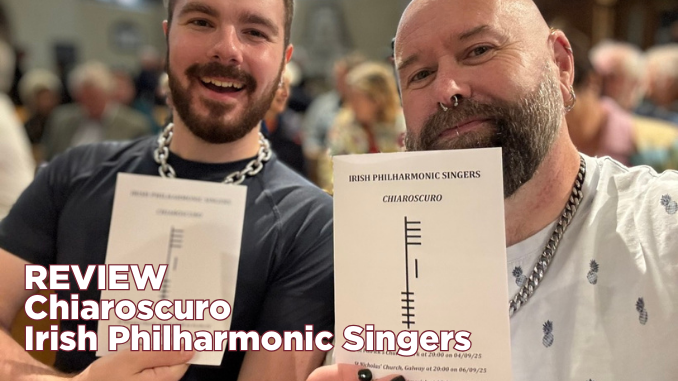
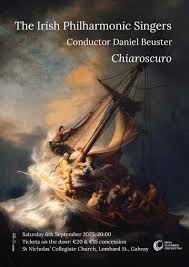
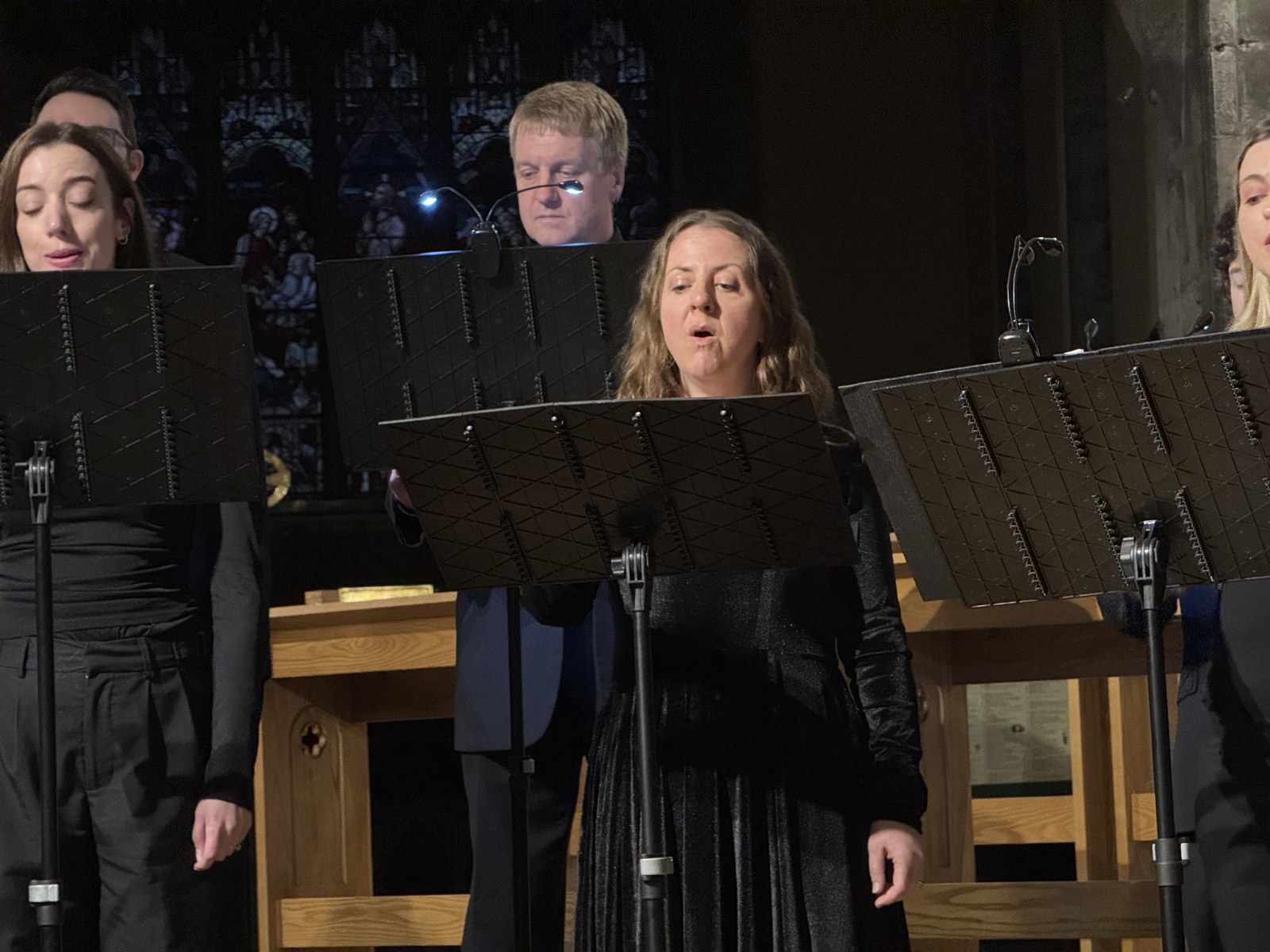
 Better late than never - and as reviews go, some concerts deserve the luxury of reflection. The Irish Philharmonic Singers' Chiaroscuro, performed on 6 September 2025 in the magnificent St. Nicholas' Collegiate Church, Galway, was one such event: an evening of meticulous artistry and emotional depth that invited attentive listening and rewarded it with resonance, both musical and spiritual. What emerged was not merely a programme of contemporary choral works, but a vivid demonstration of the emotional breadth and striking beauty that 24 voices, finely tuned and united under inspired leadership, can achieve.
The Setting
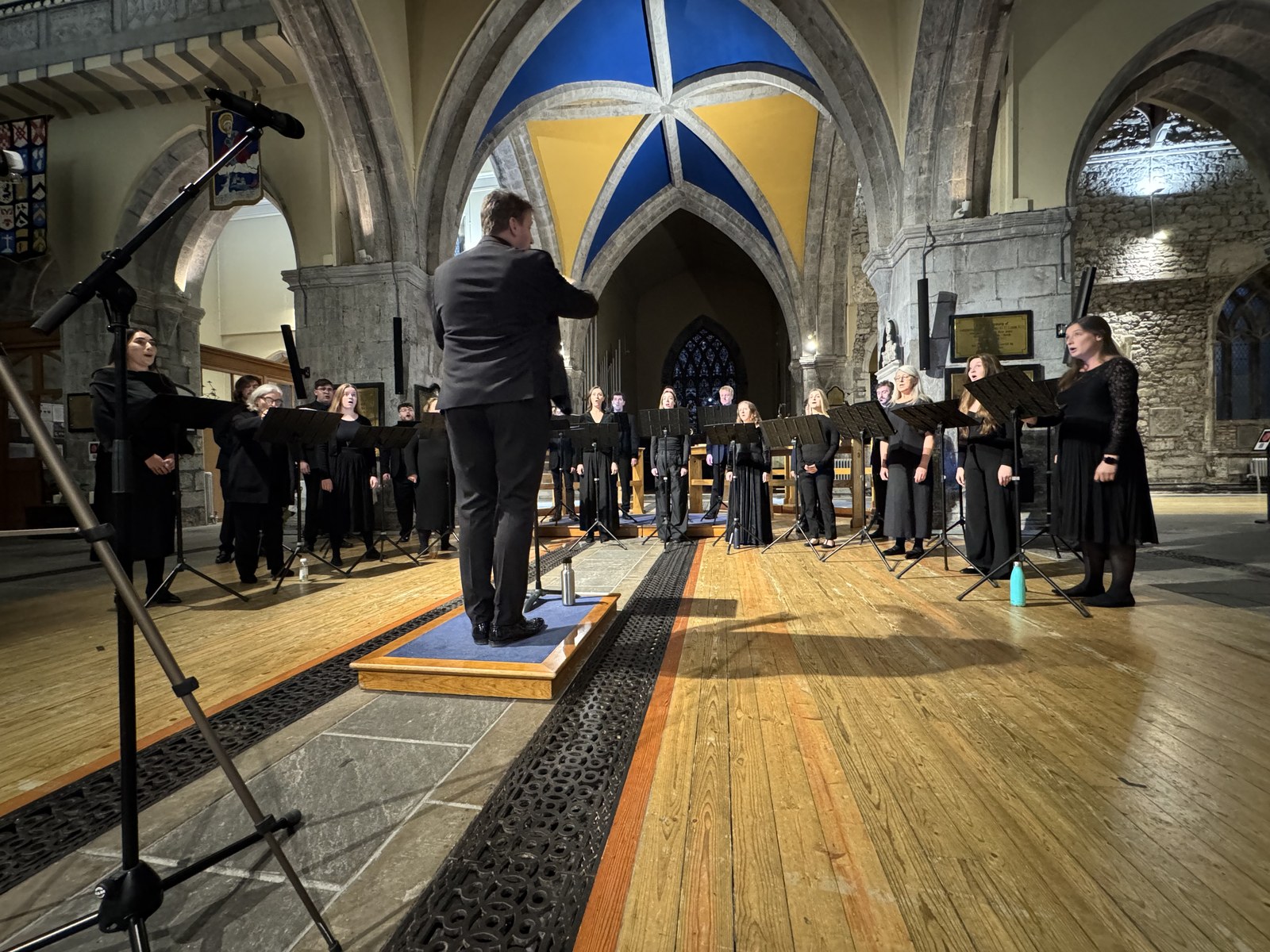
St. Nicholas' Collegiate Church, with its 700 years of history, is no stranger to music. Its medieval stone, weathered yet alive with centuries of sound, forms a setting at once austere and luminous. The acoustic within is extraordinary: clear but not overly dry, resonant but never muddied. Every detail of diction, every nuance of phrasing, carried into the farthest pew without the slightest effort. For a choir of this calibre, the venue was not simply a backdrop but an integral partner, magnifying and colouring their interpretations.
As the concert unfolded, one was keenly aware of the dialogue between space and sound - the ancient architecture amplifying the modern idioms of post-avant-garde, neo-romantic composition, creating a bridge from past to present. Few concert venues in Ireland could have framed such a programme so perfectly.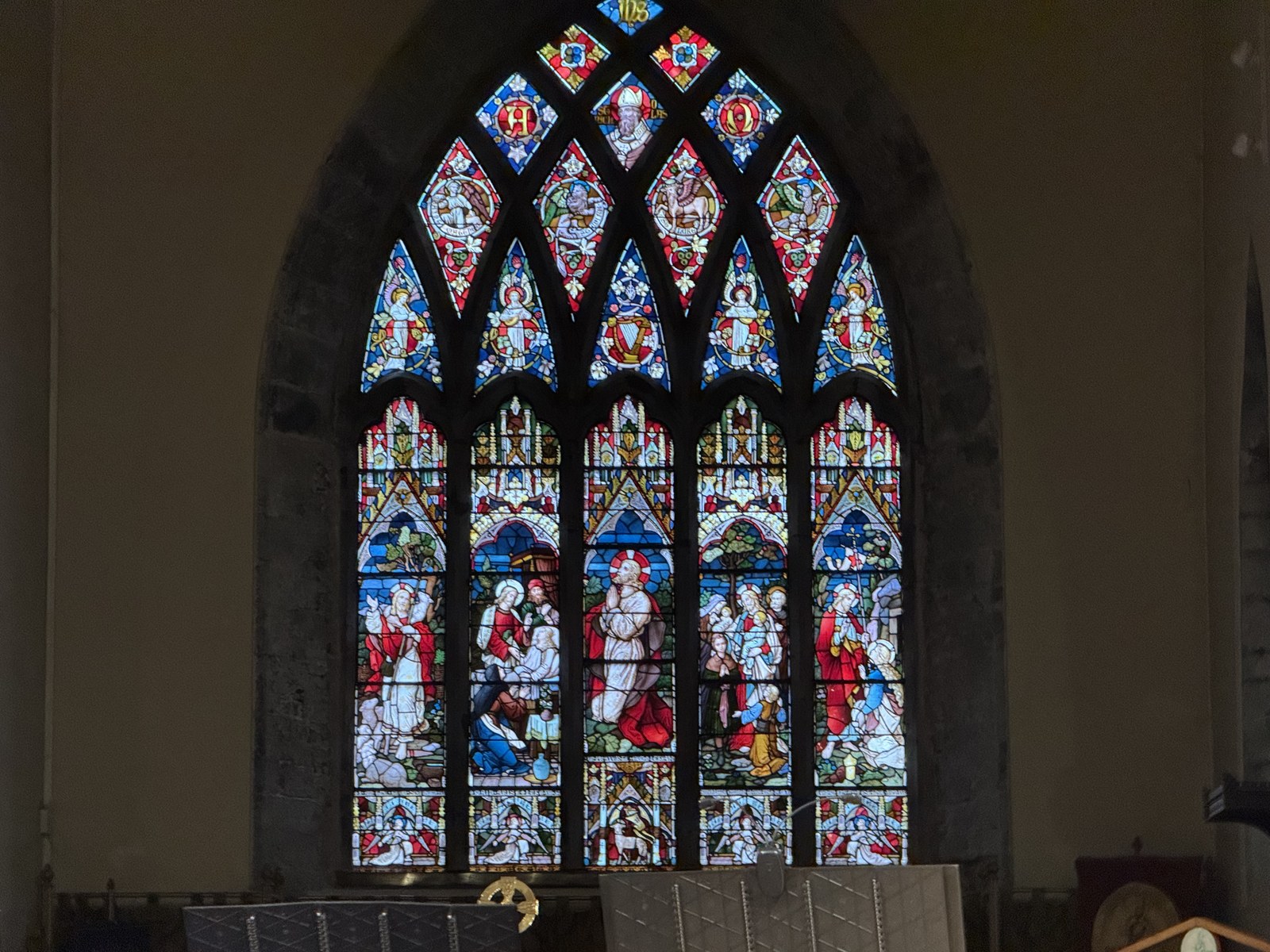
The Programme in Detail
Kile Smith: Before Your Late Face
The concert's opening was appropriately striking. Celan's poetry, distilled into Smith's edge-of-silence rhythms and harmonies, became a meditation on loss and presence. The Irish Philharmonic Singers captured its fragility with disciplined control: hushed chords that seemed scarcely breathed, suspended dissonances that grasped at meaning. It was an opening that commanded silence from the audience and set the emotional stakes for the evening.
Rautavaara: Kyrie
From austerity to transcendence, Rautavaara's Kyrie (the first movement of his 2011 Mass for a cappella voices) introduced a luminous shift. Its phrases unfurled like streams of light through stained glass, with the choir delivering balance and poise. Particularly striking was the homogeneity of tone: each vowel unified, each dynamic swell sculpted with precision. Here, the Singers showed their ability to sustain spiritual intensity without affectation, allowing the music to simply resonate with honesty.
Rautavaara: Canticum Mariae Virginis
If the Kyrie offered ritual stillness, the Canticum Mariae Virginis was radiant with colour. The soprano duet, sung by Saoirse Knauer and Edel Coughlan, floated above the choral texture with effortless clarity. Their matched timbres gave the impression of a single, luminous voice weaving in counterpoint against the choir's sustained harmonies. The result was devotional yet human, reverent without reserve, and one of the evening's undeniable highlights.
 Mäntyjärvi: Canticum Calamitatis Maritimae
The programme's weightiest offering was Mäntyjärvi's reflection on the 1994 tragedy of the MS Estonia. More than a choral piece, it is a dramatization of grief. Whispered fragments of text, chants, spoken names, and waves of tone clusters evoked both the vastness of the sea and the cries of those lost. Under Daniel Beuster's steady guidance, the Singers navigated the work's complex demands, shifting textures, enlarged dynamics, and spoken rhythms, with extraordinary command. The climaxes were visceral, crashing against the church's stone with seismic force, before dissolving into threads of silence that drew breath from the audience. The impact of this work was not intellectual but deeply visceral.
Caroline Shaw: And the Swallow
From grief to gentleness, Shaw's setting of Psalm 84 acted as balm. The piece, with its looping motifs and play of delicate intervals, glowed in performance. The Irish Philharmonic Singers gave it intimacy, finding lightness in its repetitions, subtly accenting the moments of repose. In contrast to the harrowing Mäntyjärvi, here was simplicity and calm, and the audience seemed visibly soothed by the shift.
Alfred Schnittke: Bogoroditse djevo
For double choir, Schnittke's prayerful setting was unveiled with grandeur. Dividing into two groups, the ensemble produced a magnificence of sonority, the two choirs conversing in resonant dialogue. The depth of the basses, particularly voices like Frank McCann and Justin Donnellan, was matched by the radiance of the soprano line, giving the sacred text a monumental quality. It was a work that felt crafted for the acoustics of St. Nicholas', swelling upward until stone itself seemed to vibrate in sympathy.
 Evelin Seppar: Near
Closing the programme was Seppar's intimate setting of Elizabeth Barrett Browning, a contrast to the larger canvases of Mäntyjärvi and Schnittke. Where the earlier works reached outward, Near reached inward, a meditation on closeness and tenderness. The performance was restrained yet saturated with warmth, the choir's blended sound carrying the text's intimacy into every corner of the church. It was a fitting conclusion, tracing the arc of chiaroscuro, from shadow to glowing light.
The Ensemble
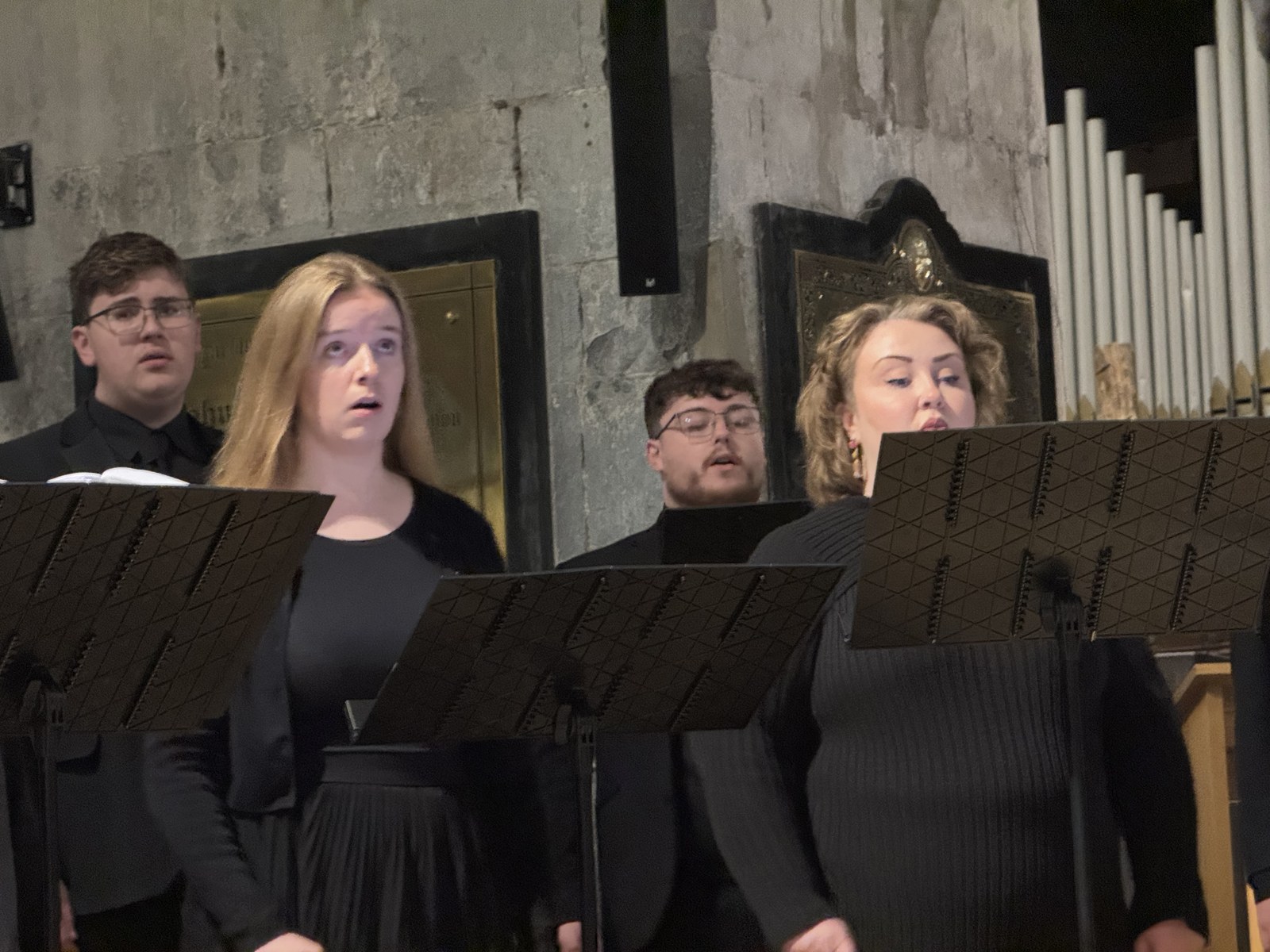
The Irish Philharmonic Singers may be newly formed, but their precision and artistry carry the weight of long-seasoned professionalism. Each section had distinction: sopranos bright but never strident, altos mellow, tenors secure, basses resonant. Noteworthy throughout was the discipline of ensemble: cut-offs, phrasing, and dynamics executed with a unanimity rare in young ensembles.
Individually, certain voices shone: Saoirse Knauer and Edel Coughlan in duet; the supple inner lines from altos like Emma Downes and Ruah Pearson; tenor contributions from Luke Condon and Conor Prendiville lending the middle textures strength and clarity. Yet the greatest achievement lay in collective balance, the erasure of ego into a cohesive whole.
 The Conductor
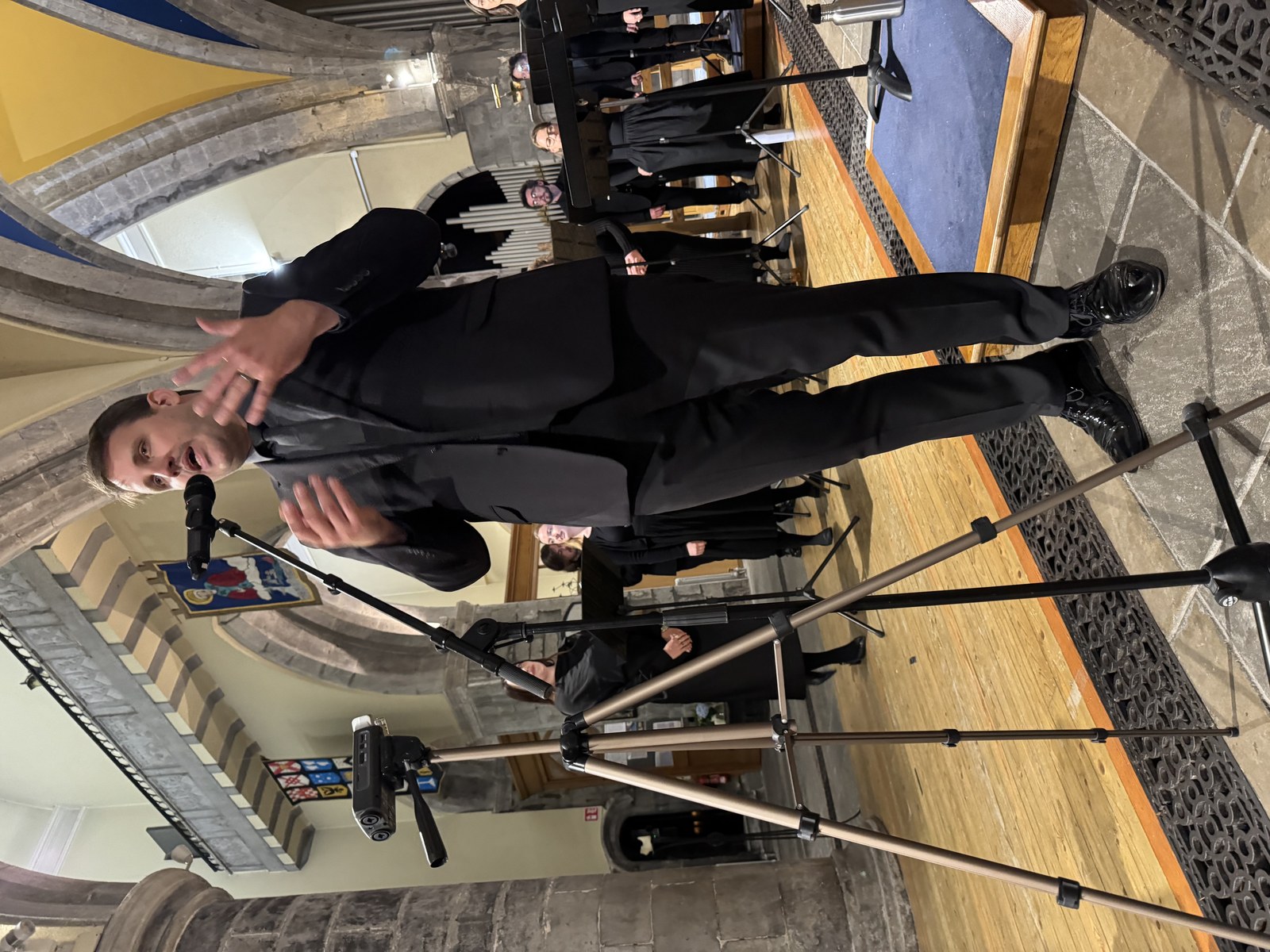
Any performance of such demanding repertoire relies on strong artistic vision. Here, Daniel Bresuster's presence was decisive. His background in the Estonian choral tradition, with mentors such as Tõnu Kaljuste and Sylvia Landra, showed clearly in his interpretative approach: clarity of gesture, precision of rhythm, but always guided by emotional truth. Beuster's ability to shape long arcs while allowing individual moments to breathe gave structure without rigidity. He has both scholarly command and an instinct for drama, qualities that drew out the full potential of this young ensemble.
 Conclusion
Chiaroscuro was a remarkable achievement: a thoughtfully curated programme, expertly performed in a venue made for music of this scope. More than a debut, it was a statement of purpose for the Irish Philharmonic Singers, to bring Ireland the finest of contemporary choral music, rendered with love of harmony in its truest sense. The voices filled St. Nicholas' with light and shadow, with mourning and hope, with intimacy and grandeur. One left the church humbled, uplifted, and keen to hear more from an ensemble already staking its claim as one of Ireland's most important new artistic forces.